
PRP Hair Treatment
Why Choose Enfield Royal Clinic for PRP Hair Treatment in Abu Dhabi?
- Professionals: Our skilled, board-certified hair specialists have over 10 years of experience treating a range of hair issues.
- Personalized Treatments: Each patient gets a customized treatment plan designed specifically to manage their conditions.
- Consultation and Diagnosis: Our trichologists and dermatologists carefully evaluate every patient to provide accurate diagnoses of their conditions.
- Safe Procedures: All treatments we offer are extensively tried and tested to make sure they are 100% safe and effective.
- Cleanliness and Safety Protocols: We maintain strict cleanliness and safety standards to keep our patients protected during their stay.
- Warm and Confidential Environment: Patients will find a friendly and open environment at our clinic, where privacy and satisfaction are a top priority.
- Lasting Results: Our experts strive to provide support and maintenance for all patients to ensure a safe recovery and lasting effects from all treatments.
Table of Contents
Meet Our Expert Hair Specialists for Your Hair Loss Treatment:
At Enfield Royal Clinic AD, we have skilled dermatologists and hair specialists with the knowledge and skills to provide all the necessary counsel, accurate diagnosis, and effective cures for your hair conditions. These experts, like Dr. Ahmed Naji Attiyah, have trained for years to treat the disorders of the skin, hair, and body with their arsenal of cosmetic and advanced procedures. Our PRP hair treatment in Abu Dhabi is just one of many solutions that foster natural hair growth and improve its thickness, helping with shrinking hairlines and damaged scalps. Here we share all you need to know about this treatment.
What is PRP Hair Treatment?
PRP or platelet-rich plasma treatment is a risk-free and versatile remedy that we can use for a number of different skin or hair conditions. The plasma, injected into the scalp, triggers natural healing processes and repairs the damaged hair follicles over time. The process is admittedly slow, but it is very efficient at strengthening follicles. The treatment makes the hair denser, healthier, and less vulnerable to future damage. PRP is very useful even for genetics-based hair loss like androgenetic alopecia.
What Causes Hair Loss?
Every man and woman, at some point, has anxieties about hair fall and thinning. Female- or male-pattern baldness, also known among professionals as androgenetic alopecia, is the most common kind of hair loss, which is a hereditary disorder. These issues could have other causes, too. Usually, a combination of genetics, hormonal changes, medications, skin conditions, mental and physical stress, etc. Almost all of these triggering factors weaken or damage the hair follicles that maintain the growth and density of hair on the scalp. Platelet-rich plasma can be very helpful here because it also targets these follicles and has a remarkable ability to reverse most of this damage.
How Does PRP Hair Treatment Work?
For this procedure, we need the platelets from our blood because they have special growth factors that boost tissue repair and cellular regeneration. However, our blood has a mixture of many other components as well that we don’t need for this treatment. Here is how we prepare the injections:
- Blood: We take a small amount of blood from the patient.
- Centrifuge: We process the blood in a centrifuge to separate the platelets and plasma from the rest of the components of the blood.
- Injection: We extract the “platelet-rich plasma” into injections that could be used wherever we want to encourage healing and cellular repair.
What Conditions of Hair Loss Can PRP Therapy Treat?
These PRP injections can be used to treat almost all kinds of hair loss. Here are a few hair issues that we typically treat with PRP:
- Androgenetic Alopecia.
- Alopecia Areata (an autoimmune disorder).
- Thinning hair.
- Early-stage hair loss.
- Patchy hair fall.
Types of PRP Hair Treatment:
We can prepare this treatment in different ways to deal with different kinds of hair conditions. This gives us a few notable types of PRP:
Standard
Most common procedure. Blood is centrifuged to get a concentration of platelets.
Biotin Enhanced
Used to increase benefits like hair health and strength.
Growth Factor Concentrate
Used for stronger results. More platelets and growth factors are concentrated in the plasma.
Platelet-rich Fibrin
A recently developed procedure. Releases growth factors more slowly for more sustained effects.
Red PRP
Used to increase oxygen flow to the tissue and improve healing. Contains some red blood cells in addition to platelets and plasma.
Combined A2M
Effective for reducing inflammation and hair damage. Standard PRP combined with Alpha-2-Macroglobulin proteins.
How Many PRP Hair Sessions Are Required?
Most patients need at least 4 or 6 sessions of these PRP injections to get significant improvements. However, this is not a fixed number and could vary based on the degree of hair loss and the patient’s general health. Here are a few details that demonstrate this difference according to the extent of a patient’s issues.
| Hair Loss | Sessions | Spacing | Volume |
|---|---|---|---|
| Mild | 3 to 4 | 4 to 6 weeks | 4 to 6 mL |
| Moderat | 4 to 6 | 4 to 6 weeks | 5 to 7 mL |
| Severe | 6 or more | 4 weeks | 7+ mL |
PRP Hair Treatment Cost in Abu Dhabi
PRP hair treatment cost in Abu Dhabi is usually around 500 AED to 4000 AED. Just as with the sessions, however, these prices are not fixed. Here are some rough estimates calculated for some standard treatment scenarios:
| Treatment | Approximate Expenses |
|---|---|
| Mild Hair Fall | 500 AED to 1500 AED |
| Moderate Hair Loss | 1000 AED to 2500 AED |
| Severe Thinning | 3000 AED to 4000 AED |
| Small Treatment Area | 500 AED to 1000 AED |
| Multiple Treatment Areas | 2000 AED to 3000 AED |
Factors Affecting the Cost:
As we mentioned, the prices of PRP treatments for hair loss are not fixed. There are a few reasons for this, given below:
- Number of sessions required.
- Size of the target area.
- Extent of the hair conditions.
- The expertise of the hair specialist.
- The reputation of the clinic.
- Expenses for medical tools and equipment.
- Additional treatments combined with PRP.
- Post-treatment medication and products.
Who Is An Ideal Candidate For PRP Hair Treatment?
Concern 1
Continuous Hair Fall:
Individuals with a rate of active hair loss of more than 100/day for over 3 months.
Concern 2
Pattern Baldness:
Men or women dealing with a receding hairline and thinning on the crown.
Concern 3
Good Physical Health:
Those free of underlying health concerns like thyroid, blood, or chronic skin pathologies.
Concern 4
Hair Falling in Patches:
Individuals who have their hair falling in patches or unevenly across the scalp.
Concern 5
Prefer a Non-surgical solution:
Those who are looking for a non-invasive, minimal downtime treatment for their hair problems.
Concern 6
Realistic Expectations:
Patients should understand that the treatment takes multiple treatments over a period of several months to show optimal effects.
When PRP Hair Restoration Therapy Is Not Right For You
- Are a heavy smoker or drink too much alcohol.
- Have a thyroid or blood disorder.
- Struggle with stress or some other mental condition.
- Use blood-thinning medications.
- Are a heavy smoker or drink too much alcohol.
- Have a thyroid or blood disorder.
- Struggle with stress or some other mental condition.
- Use blood-thinning medications.
PRP Hair Treatment Procedure: Step-by-Step Guide
It would be useful at this point to explain how the procedure actually works for the patient. Here is what you should expect when you walk into the clinic for your PRP hair restoration.
Before Treatment
- The dermatologist or hair specialist of your choice examines your hair.
- They assess the cause behind the condition.
- They also determine if a PRP treatment would be suitable for you.
- You will receive a few instructions to prepare for the procedure.
- In particular, they will advise you to stay hydrated.
During Treatment:
- The specialist will carefully draw some of your blood (typically 30mL).
- They will place this blood in a centrifuge and prepare the PRP.
- Then, your doctor will clean your scalp and apply an anesthetic.
- The PRP will be injected into the areas with signs of hair loss.
After treatment:
- The whole procedure could take about 60 or 90 minutes.
- Your specialist will clean and disinfect your scalp after the injections.
- In some cases, they apply ointments to soothe the treated skin.
- You might get a schedule for your follow-up sessions, if needed.
- If there are no complications, you are free to return home for recovery.
Recovery Timeline for PRP Hair Therapy
Most individuals recover quickly after this treatment with no major side effects or need for extensive downtime. Below is what a typical recovery process looks like for these PRP procedures:
Days 1 to 2 :
Inflammation, redness, and tenderness are common at the injection sites. Your scalp might feel itchy and irritated. Avoid touching or washing the area.
Days 3 to 7:
Swelling and itchiness fade. You can wash your hair normally, though it is advised to refrain from heat styling or using any harsh products.
Weeks 2 to 4:
Hair fall might get worse for a short time, but it should get manageable within these weeks. You will also notice some initial improvements in the volume and density of hair.
Months 3 to 6:
Most side effects from the treatment subside, and new hair growth starts during these months. You will notice an increase in the volume and thickness of your hair as the dormant follicles are activated.
Results:
Here is what your scalp might look like before and after PRP injections, from our trusted patients:
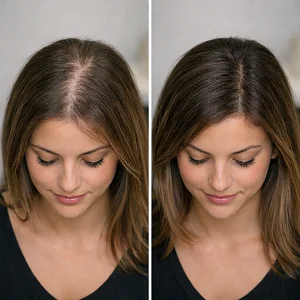
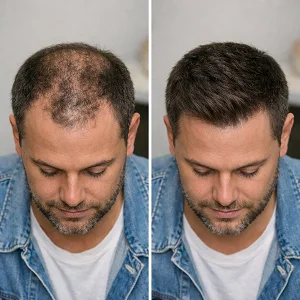
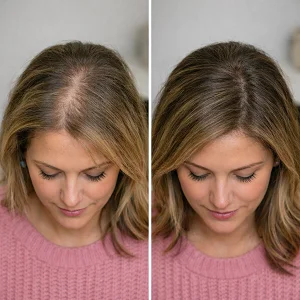
The results of the treatment and when they appear vary from person to person. The shedding usually declines in the first 1 or 3 months. Hair density improves around 3 to 6 months after treatment, as new growth picks up. By the first year, most patients notice the optimal results: healthier and stronger hair.
Benefits:
- Promotes new hair growth.
- Increases hair thickness.
- Reduces hair fall and thinning.
- Improves general scalp health.
- Reverses baldness at the hairline and crown.
Risks:
- Mild swelling and bruising.
- Itching.
- Pain or tenderness at the injection sites.
Our Safety Protocols To Minimize Risks:
- Sterilized tools to prevent bacterial infections.
- Single-use needles and equipment for each patient.
- Accurate diagnosis from careful examination and assessment.
- Safe and professional application of anesthesia.
- High-quality plasma extraction to ensure concentrated platelets.
- Detailed after-care guidelines for a safe and proper recovery.
PRP Hair Procedures For Men and Women
| Feature | Men | Women |
|---|---|---|
| Pattern of hair loss | Mostly a receding hairline and balding crown | More diffuse thinning, particularly along the part line |
| Target Areas | The regions right above the forehead, over the temples, and at the crown | The complete scalp, but with more attention on the crown and its surroundings |
| Required Sessions | Typically 4 or 6 sessions | 3 or 5 sessions |
| Goals | Decreasing further receding of the hairline and restoring hair | Stimulating dormant hair follicles and increasing density |
| Effectiveness | Highly effective with proper care and maintenance | Highly effective with proper care and maintenance |
PRP Hair Treatment vs. Hair Transplants
| Feature | PRP Hair Treatment | Hair Transplants |
|---|---|---|
| Type | Non-surgical injections | Surgical procedure |
| Primary Use | Decreasing hair loss and thinning | Filling bald spots and receding hairlines |
| How It Works | Stimulates and repairs existing follicles | Replaces impaired follicles with healthy ones |
| Best For | Early or mild thinning | Moderate or severe loss |
| Duration | Effects are temporary | Permanent |
| Downtime | Low to none | 1 or 2 weeks, at least |
| Cost | Low upfront, higher over time | High upfront, lower over time |
| Time To Results | 3 to 6 months | 9 to 12 months |
Restore Your Hair And Confidence, Book Us Now!
The best solutions to hair loss and thinning, all at Enfield Royal Clinic AD. Our expert trichologists and dermatologists offer a variety of remedies for your skin and body issues, including our famous PRP hair treatment in Abu Dhabi. Fill out the form given below to schedule your appointment with one of these experts today. You can submit your queries and concerns about our procedures through our helpline or via WhatsApp.
FAQ's:
Using PRP to treat hair problems is considered “off-label”, which essentially means that it is not officially approved by the FDA for this particular purpose, but still safe to use.
At most clinics, specialists use either numbing creams or local anesthesia to desensitize the scalp before administering the injections to ensure patient comfort.
Generally, the life of most PRP hair treatment results is around 9 to 18 months, longer with proper care and regular maintenance treatments.
Platelet-rich plasma therapy is highly effective for hair loss and other scalp disorders, with positive results in an average of 70 to 80% of patients.
In the first 2 or 3 months, expect a considerable reduction in hair fall and thinning. In the next 4 or 6 months, you will notice new growth and increasing density.
No, normally, patients don’t need much downtime after this treatment. However, in case of a complication, an individual might need to take at least a day off.
For some mild conditions, 2 sessions might be enough, but generally, patients require at least 3 to 6 sessions of PRP to get any noticeable results.
Sometimes, PRP treatments can fail. Usually, the reasons for this are: insufficient quantity of platelets, poorly placed injection, or underlying health issues.
Dr. Muhammad Jan
Dermatologist
Dr. Saba Khan
Dermatologist
Dr. Ahmed Naji Attiyah
Plastic and Reconstructive Surgeon